Choose the Right Ice Machine to Maximize Your Smoothie Bar ROI
Smart equipment selection drives down operational costs and boosts profit margins. Different ice machine types serve specific business needs and require targeted maintenance strategies to protect your investment.
Modular ice machines
Modular units deliver high-volume ice production for busy smoothie operations. These powerhouse machines produce between 250-1,000 pounds of ice daily, perfect for high-traffic locations and multi-store operations.
Control maintenance costs with strategic upkeep. Check air filters monthly to prevent costly breakdowns, especially in flour-heavy environments like bakeries operating smoothie counters. Schedule professional descaling twice yearly to prevent scale buildup that kills production capacity. Inspect evaporator plates regularly to catch damage before it impacts your daily ice output.
Self-contained units
Self-contained machines combine production and storage in space-efficient designs. Daily output ranges from 75-500 pounds, ideal for standalone smoothie bars and smaller operations.
Maintain peak performance through consistent bin cleaning. The FDA mandates manufacturer cleaning protocols at minimum twice yearly. Sanitize storage bins every two weeks to prevent mold growth that contaminates your product. Monitor condenser performance closely—limited ventilation in these compact units can trigger expensive overheating repairs.
Undercounter models
Undercounter units maximize valuable counter space while meeting moderate ice demands. These versatile machines fit seamlessly into smoothie bar layouts and small restaurant operations.
Ensure proper ventilation to avoid costly repairs. Maintain 6 inches of clearance around air intakes to prevent overheating. Clean and sanitize storage bins monthly using manufacturer-approved solutions. Replace water filters every six months to maintain ice quality and prevent mineral damage that reduces machine lifespan.
Countertop dispensers
Countertop dispensers offer self-serve convenience with daily production between 50-400 pounds. These units work well for healthcare facilities and small café environments.
Prioritize sanitization to protect customer health and avoid liability issues. Clean weekly in high-use environments to prevent bacterial contamination. Focus on dispensing mechanisms where contaminants collect. Descale every three to six months to maintain ice quality and prevent mineral buildup that damages internal components.
How Ice Machine Operation Impacts Your Bottom Line
Understanding ice machine mechanics helps smoothie bar owners identify profit-draining issues before they become costly repairs. This knowledge protects your investment and maximizes operational efficiency.
The refrigeration cycle explained
Every ice machine relies on a four-component refrigeration system that transforms water into ice. The compressor functions as the system's pump and motor. The compressor pressurizes refrigerant gas while raising its temperature. This hot, high-pressure gas travels to the condenser, where it cools and becomes a high-pressure liquid.
The refrigerant then passes through an expansion valve (also called a metering device), which controls pressure before entering the evaporator. Pressure drops significantly as refrigerant moves through this valve, causing rapid temperature decrease.
Cold refrigerant reaches the evaporator, where ice formation occurs. The refrigerant absorbs heat from surrounding water, causing it to freeze onto the evaporator surface. Throughout this cycle, refrigerant alternates between gas and liquid states while temperature and pressure fluctuate.
Why internal components need regular care
Regular maintenance protects your equipment investment. Components that contact water are susceptible to scale buildup, which impedes heat transfer and causes:
- Delayed ice harvesting and reduced capacity
- Extended harvest times and freeze-ups
- Expensive repairs and component failures
Without proper cleaning, mineral deposits accumulate on evaporator plates. This prevents ice from releasing properly. The buildup forces your machine to work harder, consuming more energy and shortening its lifespan.
All water-contact surfaces require routine descaling and sanitizing to prevent biofilm formation, which harbors bacteria and affects ice quality. This maintenance directly impacts your smoothie bar's operational costs and customer satisfaction.
Essential Maintenance Tasks That Protect Your Investment
Smart smoothie bar owners follow systematic maintenance schedules to avoid expensive repairs and maximize equipment lifespan. These proven tasks keep your ice machine operating efficiently while protecting your profit margins.
Empty and clean the bin regularly
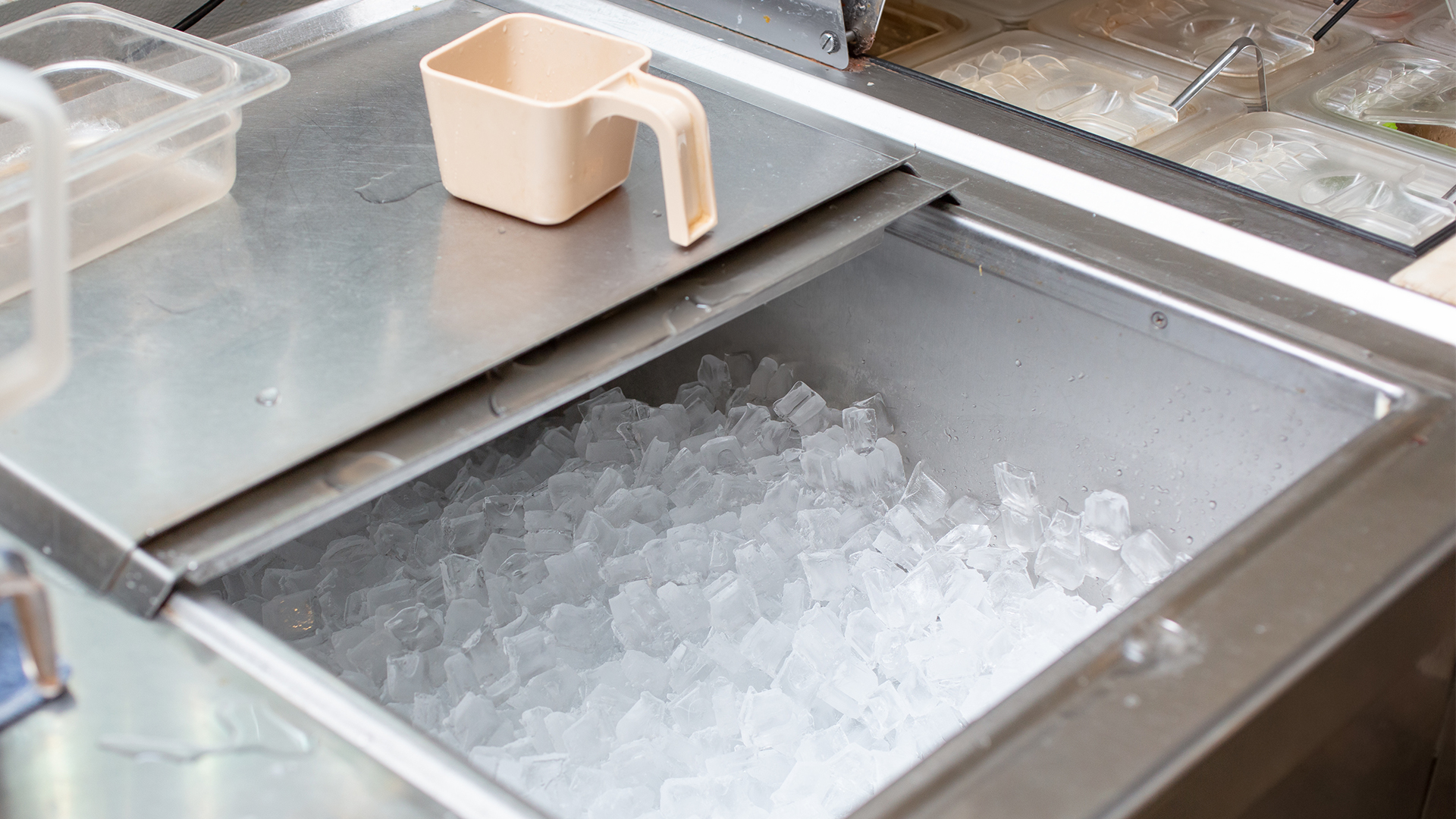
Your ice bin demands consistent attention since customers consume this ice directly. Empty the bin completely once weekly and air dry to prevent moisture buildup. High-volume operations need daily exterior cleaning with mild detergent. Focus extra attention on bin door gaskets and hinge areas where bacteria commonly accumulate. Monthly sanitization using food-safe sanitizer is essential—discard all ice before starting.
Flush and sanitize the water system
Mineral deposits and biofilm damage your water system quickly. Start by mixing a cleaning solution to manufacturer specifications—typically 5 ounces of cleaner per gallon of warm water. Apply this solution to all water-contact surfaces and rinse completely. Follow with a sanitizing solution (usually 0.5 ounces of bleach per gallon of water). Allow proper contact time before final rinsing to eliminate all contaminants.
Inspect and replace filters
Water filters directly impact ice quality and machine performance. Replace standard filters every six months regardless of appearance. High-capacity filters may extend to 12 months under ideal conditions. Air filters need monthly inspection in environments with grease or flour particles. Clogged filters force your machine to work harder, increasing energy costs and causing premature failures.
Check condenser coils and evaporator plates
Dirty condenser coils cause the majority of service calls and reduced ice production. Clean these coils quarterly with soft brushes or vacuum cleaners. Kitchen environments require monthly inspection. Air-cooled machines need 6-12 inches clearance for proper airflow. Clean along fin direction to prevent damage, using compressed air or specialized coil cleaners.
Test water pressure and ice thickness
Correct water pressure ensures consistent ice formation and harvest cycles. Most machines require 20-40 psi minimum water pressure. Low pressure creates small, incomplete cubes that jam during harvest. Monitor ice thickness regularly—thick cubes won't release properly while thin cubes shatter during harvest. Most manufacturers include adjustment mechanisms for fine-tuning ice bridge thickness.
Schedule professional service annually
Annual professional servicing prevents major breakdowns and extends equipment life. Certified technicians check refrigerant levels, inspect electrical connections, calibrate controls, and perform deep cleaning. Professional maintenance identifies problems before they become expensive repairs. Many manufacturers require bi-annual professional service to maintain warranty coverage.
Maximize Your Smoothie Bar's Ice Machine Investment
Proper ice machine maintenance directly impacts your smoothie bar's profit margins and operational costs. Each maintenance task outlined above protects your equipment investment while reducing expensive emergency repairs that can shut down operations during peak hours.
Regular cleaning schedules prevent the costly breakdowns that force smoothie bar owners to lose sales or purchase expensive emergency ice. Your maintenance checklist becomes a profit protection tool. Clean bins, sanitized water systems, and replaced filters keep your ice machine running efficiently, reducing energy costs that eat into your bottom line.
Understanding your ice machine's operation helps you spot problems before they become budget disasters. Early detection saves repair costs and prevents the lost revenue that comes with equipment downtime during busy afternoon rushes.
Well-maintained ice machines produce consistent, quality ice that keeps your smoothies at the perfect temperature and texture customers expect. Poor ice quality damages your reputation and drives customers to competitors. Clean, properly functioning equipment protects your brand while extending machine lifespan.
Professional annual service represents smart business spending that prevents major capital expenses. Certified technicians catch issues your staff might miss, protecting your equipment investment. This preventive approach costs far less than emergency repairs or premature equipment replacement.
Your ice machine investment deserves protection through consistent maintenance practices. Treat this equipment as profit-generating infrastructure that requires attention to deliver maximum returns for your smoothie bar operation.